Volkswagen Virtus : Volkswagen’s Virtus has steadily grown into one of the most talked‑about sedans in India’s fiercely competitive mid‑size segment, and the 2026 model is shaping up to be the most complete version yet.
With a sharper design language, more advanced technology, and a stronger focus on safety, the Virtus is no longer just a “premium people‑mover” but a genuinely driver‑oriented package that wants to stand shoulder‑to‑shoulder with rivals like the Skoda Slavia, Honda City, and Hyundai Verna.
Facelift and Design Refresh
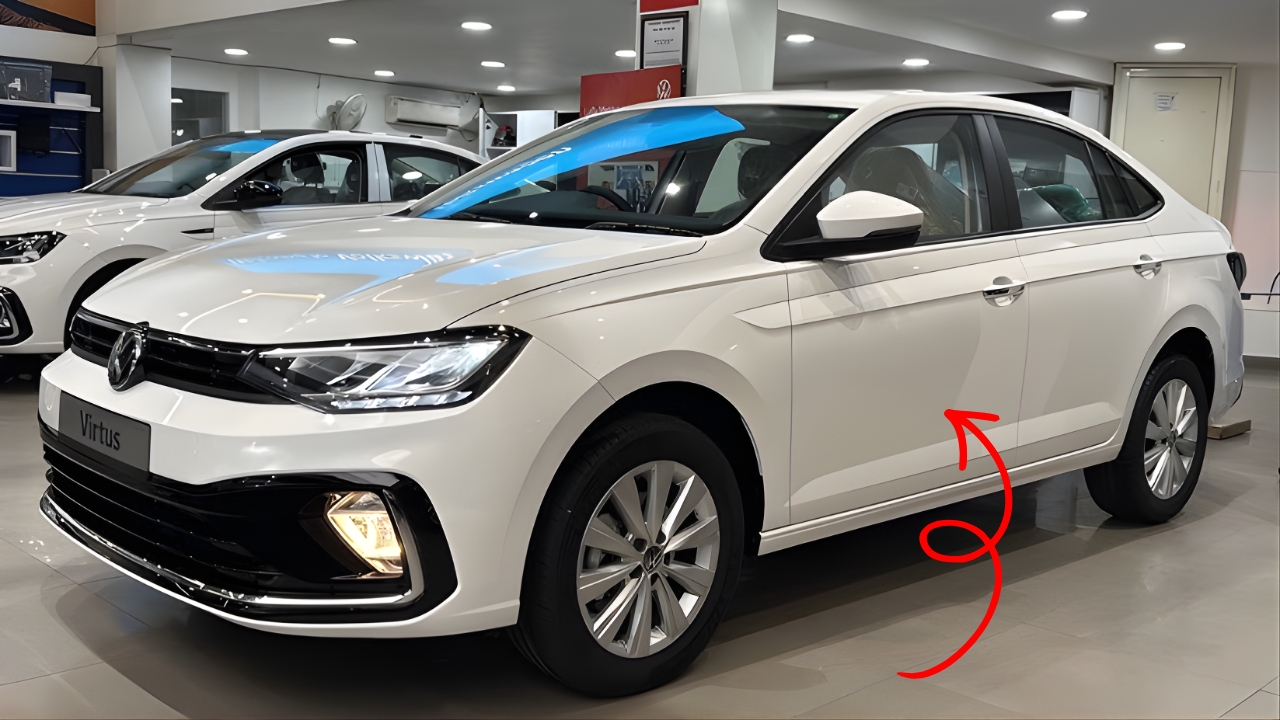
The 2026 Virtus is set to arrive as a lightly facelifted iteration, with Volkswagen tightening up its already clean, German‑origin styling.
Expect revised front and rear bumpers, updated LED headlamps and tail lamps, and a fresh set of alloy‑wheel designs that give the sedan a more modern, upscale presence on the road.
The body remains largely unchanged, but the tweaks in detailing—such as a more aggressive grille and a possible connected‑style light bar at the rear—help the Virtus look more contemporary without losing its familiar face.
Interior Ambience and Tech
Inside, the Virtus has always been praised for its no‑nonsense, high‑quality cabin, and the 2026 update looks set to raise that bar further.
Reports suggest larger touchscreens—around 10.1 inches or more—paired with a full‑size digital instrument cluster (roughly 10.25 inches), giving the driver a more connected and immersive experience.
The layout stays straightforward and ergonomic, with soft‑touch materials, revised trim pieces, and a cleaner centre‑stack design that minimises clutter and keeps controls within easy reach.
Performance and Engine Line‑up
Under the hood, the Virtus continues to rely on Volkswagen’s 1.5‑litre TSI turbo‑petrol engine, tuned to deliver strong yet refined performance.
This unit produces around 148–150 PS and about 250 Nm of torque, which is then sent to the front wheels via a seven‑speed DSG automatic gearbox, giving the sedan brisk acceleration and a relaxed cruising feel on highways.
The gearbox also comes with paddle shifters and a few driving modes, allowing enthusiasts to tweak gear changes and throttle response for a more engaging drive.
Efficiency and Practicality
Despite its sporty character, the Virtus is engineered to be relatively efficient, with ARAI figures hovering around the mid‑teens to high‑teens kmpl range, depending on the variant and transmission.
This efficiency, combined with a 45‑litre fuel tank and a generous boot capacity of over 520 litres, makes the Virtus a practical choice for both city commutes and long‑distance family trips.
The sedan also offers a comfortable ride, with a suspension setup that balances comfort and control, making it suitable for India’s mixed road conditions.
Safety and Advanced Driver Assistance
Safety remains a key pillar of the Virtus story, and the 2026 update is expected to bring a significant leap in this area.
Rumours point toward the introduction of Level‑2 Advanced Driver Assistance Systems (ADAS), potentially including features such as adaptive cruise control, lane‑keeping assist, automatic emergency braking, blind‑spot monitoring, and rear‑cross‑traffic alert.
When combined with standard features like multiple airbags, electronic stability control, hill‑hold control, and tyre‑pressure monitoring, the Virtus is positioned as a safer option than many rivals in its price bracket.
Where the Volkswagen Virtus Fits in the Market
For Volkswagen, the Virtus is more than just another sedan; it is a strategic attempt to give the brand a stronger foothold in a segment where buyers are increasingly looking for premium touches without oversized budgets.
By blending a driver‑focused chassis, a powerful yet efficient engine, and a growing list of tech and safety features, the 2026 Virtus aims to appeal to young professionals, family buyers, and enthusiasts who want a practical but engaging sedan.
Also Read This : Toyota RAV4 Hybrid New high technology features SUV, luxury style
With facelifted rivals also entering the fray, the Virtus will have to fight hard on features, after‑sales, and overall ownership experience, but its current trajectory suggests Volkswagen is building a sedan that can comfortably hold its ground in one of India’s most competitive car segments.