Tata Sierra : Tata Motors has reignited the boxy SUV dream with the launch of the all‑new Tata Sierra, a compact utility vehicle that many are already calling the “Mini Defender.”
Positioned as a rugged, lifestyle‑oriented SUV at a mass‑market price, the Sierra aims to blend the Defender‑like stance with Tata’s usual value‑for‑money play.
Why the ‘Mini Defender’ nickname stuck
The tag “Mini Defender” didn’t come from Tata; it emerged from social feeds, reviewers, and brand‑watchers who noticed how closely the Sierra’s silhouette follows the Land Rover Defender’s upright proportions and slab‑side styling.
Despite belonging to the same corporate family—Tata owns Jaguar Land Rover—the Sierra is built on Tata’s own modular ARGOS/Acti‑ev+‑derived platform, not on any shared Defender architecture.
That connection in design language, plus the boxy rear, flat roofline, and clamshell‑style tailgate, is what keeps the baby Defender comparison alive.
Design and stance on the road
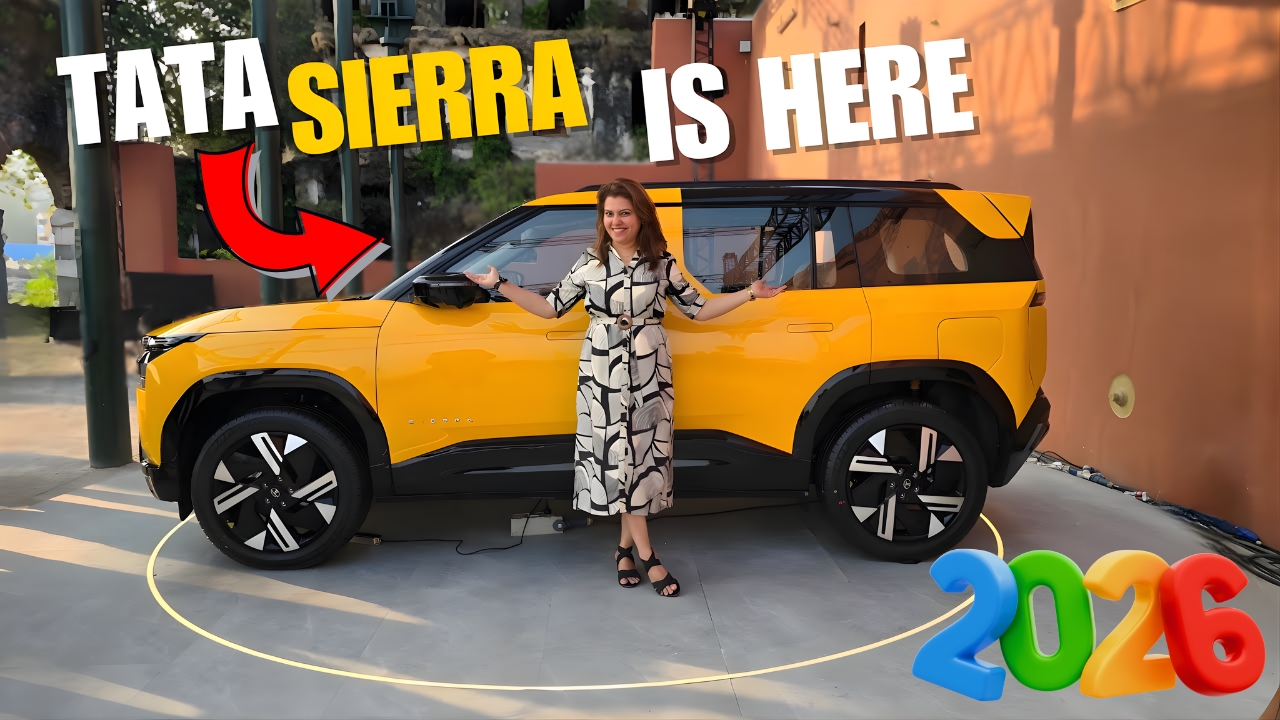
From the front, the Sierra sports a large piano‑black grille flanked by slim LED DRLs and a chunky bumper with a silver skid‑plate‑style finish, giving it a tough, off‑road‑ready look.
The sides are clean and square, with flush‑fit door handles and a high shoulder line that enhances the SUV’s commanding presence.
At the rear, the vertical glass and near‑vertical tailgate mimic a single‑piece window, topped with a tailgate that forgoes the Defender‑style rear‑mounted spare but still feels functionally oriented.
Practical, utilitarian cabin
Inside, Tata has leaned into a utilitarian theme akin to the Defender, but with more modern touches.
Expect a straightforward dashboard layout paired with a digital instrument cluster and a central touchscreen infotainment unit that borrows some visual cues from JLR’s software skin.
The cabin is designed as a 5‑seater, with focus on legroom and easy‑to‑clean surfaces, making it suitable for both city commutes and weekend getaways on rougher roads.
Powertrains and off‑road readiness
The Tata Sierra enters the market with multiple powertrain options under the hood.
The ICE line‑up includes a 1.5‑litre turbo‑petrol and a 1.5‑litre diesel unit, the latter producing around 116 bhp and 260 Nm of torque, sent to the wheels via a 6‑speed manual or 7‑speed DCT.
Tata has also confirmed an upcoming electric variant as well as an AWD version, which will be one of the first Tata SUVs in this segment to offer all‑wheel drive and further justify the “Mini Defender” image.
Pricing, trim strategy and market positioning
The Tata Sierra starts at around ₹11.49 lakh ex‑showroom in India, making it a sharp competitor to mainstream mid‑size SUVs such as the Hyundai Creta, Kia Seltos, and Honda Elevate rather than luxury off‑roaders.
Alongside the regular variants, Tata offers the Sierra ROQ Edition, an accessory‑based pack that adds extra ruggedness to the SUV’s personality and visual appeal.
Bookings opened in December 2025, with deliveries scheduled from mid‑January 2026, underscoring Tata’s push to capture buyers who want a bold, lifestyle‑oriented SUV without the Defender price tag.
Tata Sierra How it drives the narrative forward
For Indian buyers, the Tata Sierra represents a rare blend—a compact, defender‑esque SUV with mass‑market pricing, practical cabin space, and a growing tech and safety suite.
Also Read This : Hyundai Verna 2026 Premium style sedan in segment, smart technology features
While it does not match the Land Rover Defender in refinement, luxury, or extreme off‑road engineering, the Sierra successfully borrows the Defender’s attitude and packages it into an affordable, desi‑friendly SUV.
In that sense, the “Mini Defender” label is less about technical similarity and more about how the Sierra feels on the road: tough, upright, and always ready for an adventure.