Lakhtakia Tata Nano EV : Remember the buzz around the Tata Nano, fondly called the “Lakhtakia car” for its pocket-friendly price tag?
That tiny marvel promised to put India on wheels, and now, whispers from the auto world suggest it’s making a shocking electric comeback.
The Legend That Never Quite Faded
Back in 2008, Ratan Tata unveiled the Nano as the world’s cheapest car, aiming to shift families from perilous two-wheelers to safe four-wheelers.
Priced under ₹1 lakh initially, it captured imaginations but stumbled on perceptions of being “too basic” and safety concerns.
Production halted in 2018, yet the Nano’s spirit lingered, with custom EV conversions like the Jayem Neo (made for fleets) proving the platform’s EV potential—offering 140-200 km range on a 48V system.
Today, as India’s EV push accelerates with government subsidies and charging networks expanding in cities like Delhi, Tata seems poised to revive it as the ultimate urban warrior.
Electric Rebirth: What’s Cooking in Tata’s Labs?
Industry insiders are abuzz with rumors of a 2026 launch, possibly as early as April, positioning the Nano EV as India’s most affordable zero-emission hatchback.
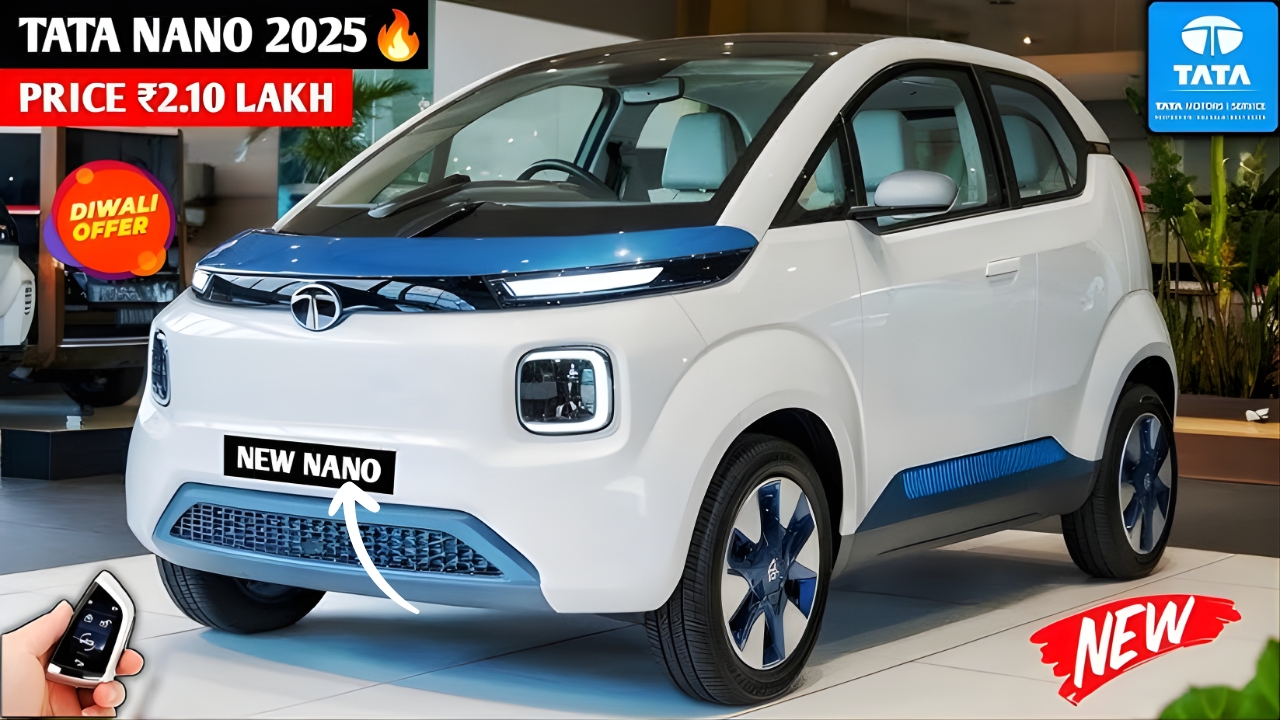
Unlike the original rear-engine setup, this one’s re-engineered with front-wheel drive for better balance, housing a compact permanent magnet motor pumping out 30-35 kW (40-47 hp) and 85 Nm torque—instant punch perfect for stop-go traffic.
A 15-20 kWh lithium-ion battery promises 200-300 km city range, with 0-80% DC fast charge in under 60 minutes or overnight AC top-up in 5-6 hours. Top speed? Around 80-105 km/h, tailored for Mumbai chawl lanes or Delhi bylanes, not highways.
Design Tweaks for Modern India
Don’t picture the boxy old Nano—this EV gets a sleek makeover with LED lamps, aero tweaks, and blue accents screaming “electric.”
Still under 3.1 meters long, it slips into the tightest parking spots, with improved ground clearance for pothole-ridden streets and IP67-rated battery/motor seals to laugh off monsoons.
Inside, space blooms sans transmission tunnel: think digital cluster, touchscreen infotainment, Bluetooth, power windows, and manual AC—practical perks without fluff.
Tata’s borrowing smarts from Nexon EV for liquid-cooled thermal management, ensuring the pack stays cool in 45°C Delhi summers.
Safety Upgrade: No More Compromises
The original Nano’s flak for flimsy crash protection? History. Expect dual airbags, ABS with EBD, rear sensors, and a reinforced chassis lowering the center of gravity for stability.
Drum brakes all around, seatbelt warnings, and even regenerative braking to stretch range—geared for family safety in chaotic traffic.
Price Tag That’ll Turn Heads
Slated at ₹5-9 lakh ex-showroom (post-subsidies, it could dip lower), it’s a steal against MG Comet EV or Tiago EV, targeting two-wheeler upgraders craving AC comfort and weatherproof rides. Running costs?
Pennies—under ₹1 per km versus petrol’s ₹5-7, plus 8-year battery warranty up to 1.6 lakh km. Battery-as-a-service options might slash upfront costs further, making it a no-brainer for cab fleets or last-mile delivery.
Why Now? India’s EV Boom Beckons
Fuel prices soaring, pollution choking cities, and FAME incentives make this timing gold. The Nano EV could flood streets with 1 lakh+ units yearly, slashing urban emissions and easing congestion.
Competitors like VinFast VF3 loom, but Tata’s dealer network and brand recall give it an edge for Tier-2 towns. Imagine: a lakh middle-class families ditching scooters, cutting accident risks while going green.
Hurdles on the Horizon
Skeptics point to charging woes in apartments and battery costs, but Tata’s betting on home/workplace plugs and fleet tie-ups.
Scale is key—hit volumes, and prices tumble. Past Nano lessons ensure no repeat: marketing emphasizes “smart city slicker,” not “cheap.”
Lakhtakia Tata Nano EV : Game-Changer or Echo?
If launched, the Lakhtakia EV won’t just sell cars; it’ll redefine affordable green mobility, echoing Ratan Tata’s dream for a billion wheels.
Also Read this – 19’s Yamaha RX100 re-launch in Indian market with Sporty eligent look, 76 Kmpl mileage, latest features
Auto enthusiasts in Delhi chai stalls already debate specs. Will you be queuing up? Tata, drop the teaser already—this one’s got us hooked.