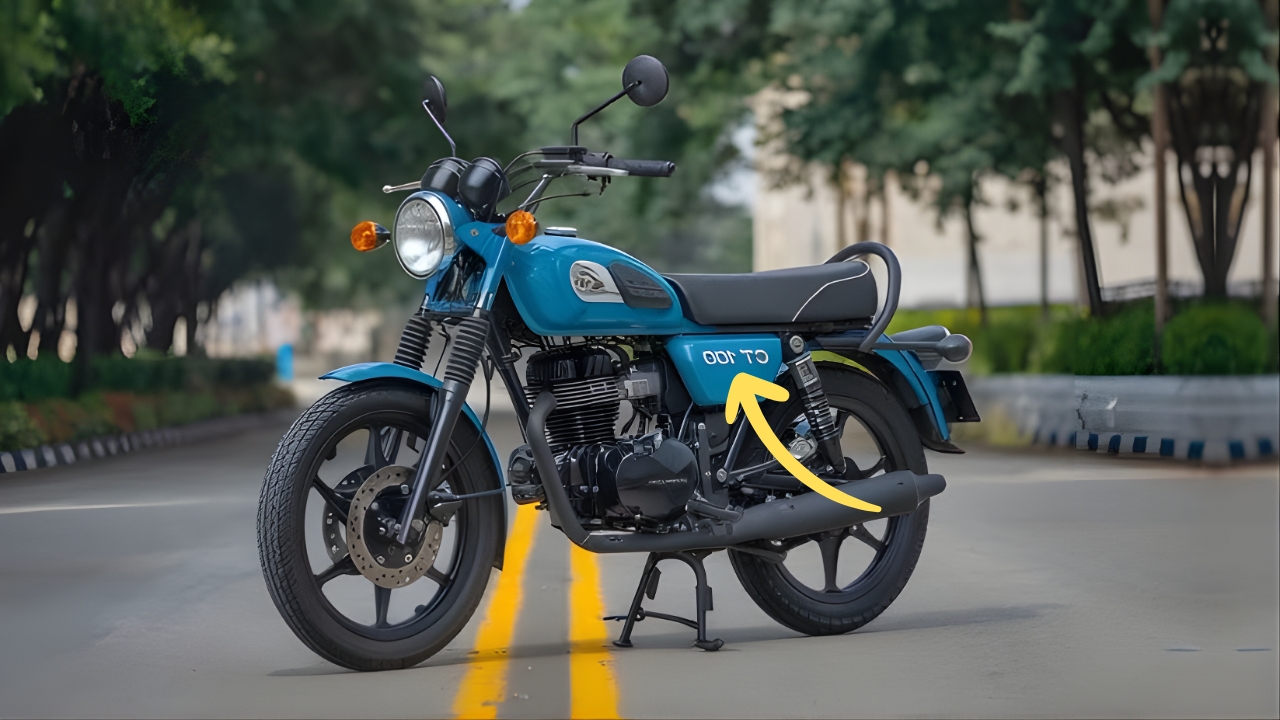
Bajaj CT 100 : For many Indian riders, the Bajaj CT100 was never just another entry-level motorcycle. It was a practical, no-nonsense machine built for daily use, low running costs, and dependable mileage, which made it especially popular among price-sensitive buyers and rural commuters.
The bike earned a loyal following by focusing on the basics rather than flashy styling or premium features, and that simplicity became part of its identity over the years.
Why the CT100 mattered
In India’s crowded commuter-bike market, the CT100 stood out because it offered a straightforward ownership experience.
Reports described it as Bajaj’s most affordable motorcycle, with a strong value-for-money pitch that helped it survive for years in a highly competitive segment.
Its reputation for excellent fuel efficiency made it attractive to riders looking to keep both purchase price and monthly fuel bills under control.
The reported discontinuation
In May 2022, multiple automotive publications reported that Bajaj Auto had stopped production of the CT100 and that dealers were no longer receiving stock or accepting bookings.
One report stated that the bike had also been removed from the company’s official India website, which further suggested that the model had been taken off sale.
However, those same reports also noted that Bajaj had not issued a formal public announcement confirming a permanent discontinuation, leaving a small possibility of a comeback at the time.
What likely led to the move
The CT100’s exit was not surprising when viewed in the broader context of the commuter-bike market.(Bajaj CT 100) Rising input costs, changing emissions requirements, and tighter pricing pressures have made it harder for manufacturers to keep ultra-budget models alive while protecting margins.
As one report observed, Bajaj may have found it increasingly difficult to maintain profitability on such a low-cost motorcycle, even though the model still had a strong reputation among buyers.
A bike built on simplicity
The CT100’s appeal was always rooted in mechanical honesty. According to published specifications, the bike used a 102 cc, single-cylinder, air-cooled engine with a 4-speed gearbox, drum brakes at both ends, and a kick-start-only setup in some versions.
It was never designed to be a feature-rich motorcycle; instead, it prioritized low maintenance, easy rideability, and efficient commuting. For many owners, that was exactly what made it useful in daily life.
Mileage and practical value
Fuel efficiency was one of the CT100’s strongest selling points. Industry listings have shown mileage figures around 99.1 kmpl for the model, while reports repeatedly described it as delivering over 70 kmpl in real-world use for many riders.
That kind of economy made it especially relevant in small towns and rural areas, where motorcycles often serve as the primary family vehicle and utility transport.
A familiar part of Bajaj’s lineup
The CT100 had been part of Bajaj’s broader commuter strategy for years, often serving as an entry point for first-time motorcycle buyers.
It was re-launched earlier in its life cycle with alloy wheels, updated graphics, and other small improvements intended to keep it competitive.
Even so, the motorcycle remained focused on affordability rather than chasing premium trends, which helped define its long-running place in the market.
What replaced its role
After the CT100 was reportedly pulled from sale, Bajaj’s CT line-up continued with the CT 110 X as the main remaining model in that family.
That shift signaled a move toward slightly more robust and modern commuter products rather than the ultra-budget positioning that the CT100 once represented.
For Bajaj, the change reflected the market’s gradual evolution toward bikes that balance cost with slightly stronger equipment and styling appeal.
Why riders still remember it
Even though the CT100 no longer appears in the active lineup, it still has strong recognition among Indian riders because it represented a very specific promise: maximum utility at minimum cost.
Many owners valued it because it was easy to maintain, light to handle, and inexpensive to run. In that sense, the CT100 became more than just a motorcycle model; it became a symbol of practical mobility for a huge number of households.
The legacy it leaves behind
The CT100’s story is important because it reflects how the Indian motorcycle market has changed. Years ago, buyers wanted the most basic machine that would reliably get them to work, school, or the market.
Today, even budget customers often expect a little more comfort, better design, and modern features, which has pushed manufacturers to rethink their entry-level offerings.
The CT100 may be gone, but the segment it once defined still influences the bikes Bajaj and its rivals build today.
Bajaj CT 100Final word
The Bajaj CT100 earned its place in Indian two-wheeler history by being affordable, efficient, and dependable. Its reported discontinuation marked the end of a long run for one of the country’s best-known commuter motorcycles, but its legacy remains visible in the way manufacturers still chase the same mix of low cost and everyday usefulness.
Also Read This : Kia Syros 2026 Level 2 Adas features SUV launch with comfort seats, price is affordable
For riders who grew up seeing the CT100 on city roads and village lanes, it will always be remembered as a bike that did one job very well.